Beyond the Facade: Unique Applications of Aluminum Composite Panels in Modern Design
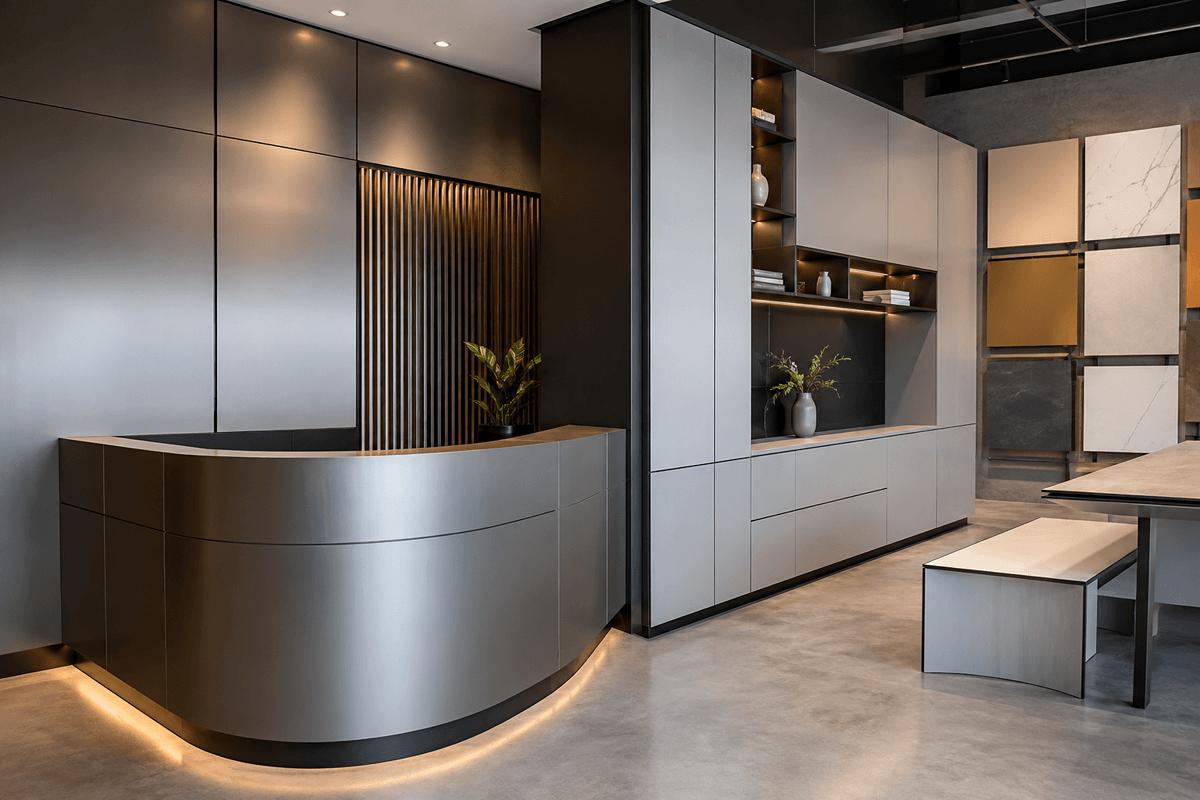
What are the unique applications of aluminum composite panels?
- Perforated and parametric facades
- Modular and mobile tiny homes
- Transit interiors and vehicle bodies
- Cleanroom environments
- Corporate and exhibition signage
- Custom furniture and cabinetry
- Urban furniture
Overview
- Aluminum composite panels (ACP) offer far more than exterior cladding, supporting applications such as perforated facades, modular housing, transit interiors, cleanrooms, signage, furniture, and urban infrastructure.
- Their lightweight strength, weather resistance, fabrication flexibility, and fire-rated options make ACP a versatile solution for modern construction projects across the Philippines.
Mention aluminum composite panels (ACP) to a local contractor, and they’ll likely picture office towers in BGC or storefronts across Metro Manila, Cebu, and Davao. While ACP remains a default exterior cladding, its utility extends far beyond standard facades.
On the ground, fabricators route ACP for custom furniture, transit projects line vehicle cabins, and electronics hubs in Clark and Cavite specify it for cleanrooms. The unique applications of aluminum composite panels stem from a core set of physical properties capable of solving vastly different challenges—from typhoon-resilient housing to public benches built for years of harsh tropical sun.
Here are seven applications that show just how far the material travels, and what specifically makes it a fit for each one.
What Makes ACP Suitable for So Many Applications?
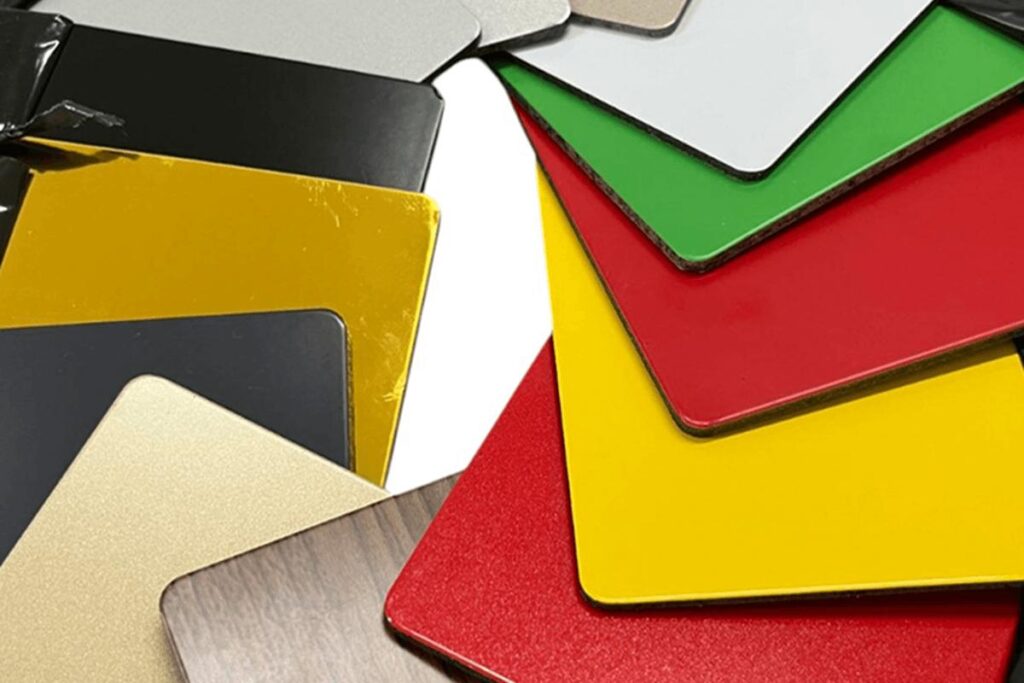
Bonded with a PE, fire-retardant (FR/B1), or non-combustible (A2) core, ACPs owe their popularity in the Philippines to four essential properties:
- High Strength-to-Weight Ratio: Delivers structural rigidity without adding dead load—a crucial advantage in seismic zones where lighter cladding systems reduce overall stress on the building frame.
- Flatness & Fabrication Precision: Excellent dimensional stability allows for clean CNC routing, folding, and perforating, enabling the same base material to be shaped into architecture, custom furniture, or signage.
- Weather & Corrosion Resistance: High-grade PVDF coatings withstand the Philippines’ combination of intense UV exposure, monsoon moisture, and coastal salt air.
- Fire-Rated Core Options: B1 flame-retardant and A2 non-combustible cores satisfy stringent fire-safety standards required in high-rises, transit hubs, and commercial interiors.
Each application below relies on a distinct mix of these traits—explaining why ACP keeps proving its value far beyond traditional exterior walls.
Perforated and Parametric Facades
Perforation turns ACP from a plain cladding skin into a functional shading and pattern-making tool. Because the panel machines cleanly, fabricators can cut consistent, complex hole patterns across large elevations without warping—something far harder to achieve with solid metal sheets or heavy masonry screens.
Malls, office towers, and mixed-use developments in Metro Manila and other urban centers use perforated ACP facades to cut solar heat gain in a year-round tropical climate, while still delivering a distinct, branded architectural look.
Modular and Mobile Tiny Homes
Builders utilize ACPs as exterior wall coverings, roofing accents, and decorative panels within modular housing systems. Their sleek finish also contributes to the clean aesthetic associated with contemporary tiny homes.
ACP’s high strength-to-weight ratio is often the deciding factor between a housing unit that can be transported and one that cannot. It delivers a finished, weatherproof exterior without adding dead load that complicates towing, craning, or shipping units by truck or barge.
The Philippines’ recurring need for fast, transportable housing—such as post-typhoon relocation, informal settler resettlement, and off-grid island housing—makes lightweight modular construction especially critical locally compared to markets without the same disaster-response housing demand.
Transit Interiors and Vehicle Bodies
Vehicle interiors demand a material that is both fire-safe and light enough to prevent excess fuel or energy costs. Fire-rated (B1 or A2 core) ACP satisfies strict flame-spread and smoke-toxicity requirements while keeping overall vehicle weight down.
Ongoing LRT/MRT rehabilitation projects and the jeepney modernization program have made transit interiors a rapidly growing local application, with fire-rated panels lining the interior walls, ceilings, and partitions of modernized public utility vehicles.
Cleanroom Environments
Cleanroom standards prioritize contamination control over aesthetics. ACP’s smooth, seamless, and non-porous surface actively resists particulate buildup and microbial growth—a purely performance-driven use case engineered for sterile environments.
The Philippines’ expanding electronics, semiconductor, and pharmaceutical manufacturing sectors rely heavily on cleanroom construction where surface hygiene is a strict operational requirement. The panels withstand frequent wipe-downs with harsh chemical sanitizers without degrading, making them a practical choice for facilities where maintaining strict atmospheric purity is non-negotiable.
Corporate and Exhibition Signage
Corporate offices, retail stores, commercial properties, and exhibition sites heavily depend on ACPs for high-impact signage solutions. The material’s seamless surface allows for precise graphics, lettering, and branding applications. They can be fabricated into diverse shapes and sizes while maintaining structural integrity and visual consistency.
In addition, the panels offer valuable protection against rain, heat, UV exposure, and corrosion, ensuring branding elements remain professional-looking. Whether for building identification, directional signage, trade show displays, or corporate installations, ACPs create visually striking presentations that support long-term performance.
Custom Furniture and Cabinetry
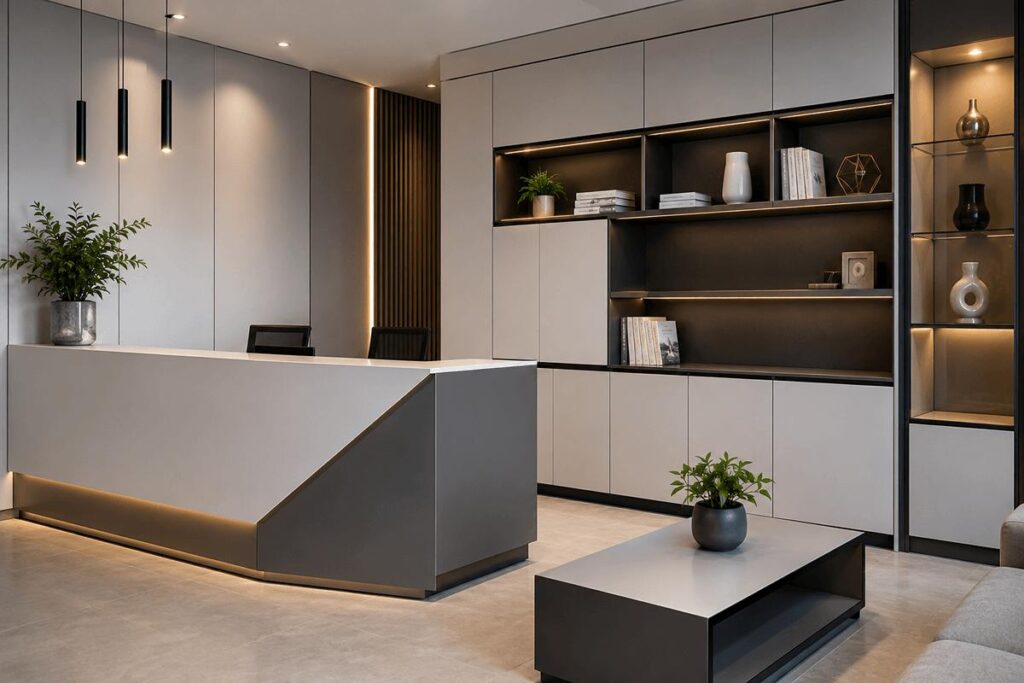
Designers and fabricators make efficient use of aluminum composite panels to make cabinet facings, reception counters, shelving solutions, display units, and decorative furniture parts. Their lightweight composition allows for easier handling and delivers a premium finish that complements modern interiors.
ACPs are also available in a variety of colors and finishes that match specific design requirements. Their resistance to moisture and daily wear makes them very useful in commercial spaces where longevity and appearance are priorities.
Urban Furniture
Public spaces call for sturdy and attractive infrastructure capable of withstanding heavy usage and environmental exposure. The panels have emerged as an ideal solution for urban furniture applications that support functionality and visual appeal.
Today, ACPs are used in bus shelters, information kiosks, public seating systems, wayfinding structures, and outdoor installations. Their corrosion resistance helps maintain appearance despite constant exposure to sunlight, rain, and pollution. Additionally, they offer design flexibility that allows municipalities, developers, and landscape architects to create cohesive public environments tailored to architectural concepts.
Build Smarter in the Philippines with Kenmos ACP Solutions
Tackling demanding builds in the Philippine climate requires trusted materials engineered for extreme heat, heavy monsoon moisture, and strict fire safety. Kenmos is a premier supplier of high-quality Aluminum Composite Panels across the Philippines, delivering reliable, adaptable panel solutions for architects, contractors, and fabricators nationwide.
From cladding commercial high-rises and fabricating custom signage to building modular interior systems, our team supports diverse construction needs with a comprehensive range of finishes—including rich wood grain, modern metallic, and vibrant solid colors.
Key Takeaway
The unique applications of aluminum composite panels demonstrate just how versatile this material has become in modern construction and design. From parametric facades and modular housing to cleanrooms, transportation systems, signage, furniture, and urban infrastructure, ACPs continue to support projects that require durability, efficiency, and architectural flexibility.
At KENMOS, we provide high-quality aluminum composite panels that cater to the demands of modern construction, architectural, and commercial applications. Whether you’re planning a large-scale facade system, a modular housing project, or a specialized installation, our team is ready to help you find the right solution. Contact us today to learn more about our offerings.