Key Challenges in Facade Designs in the Philippines
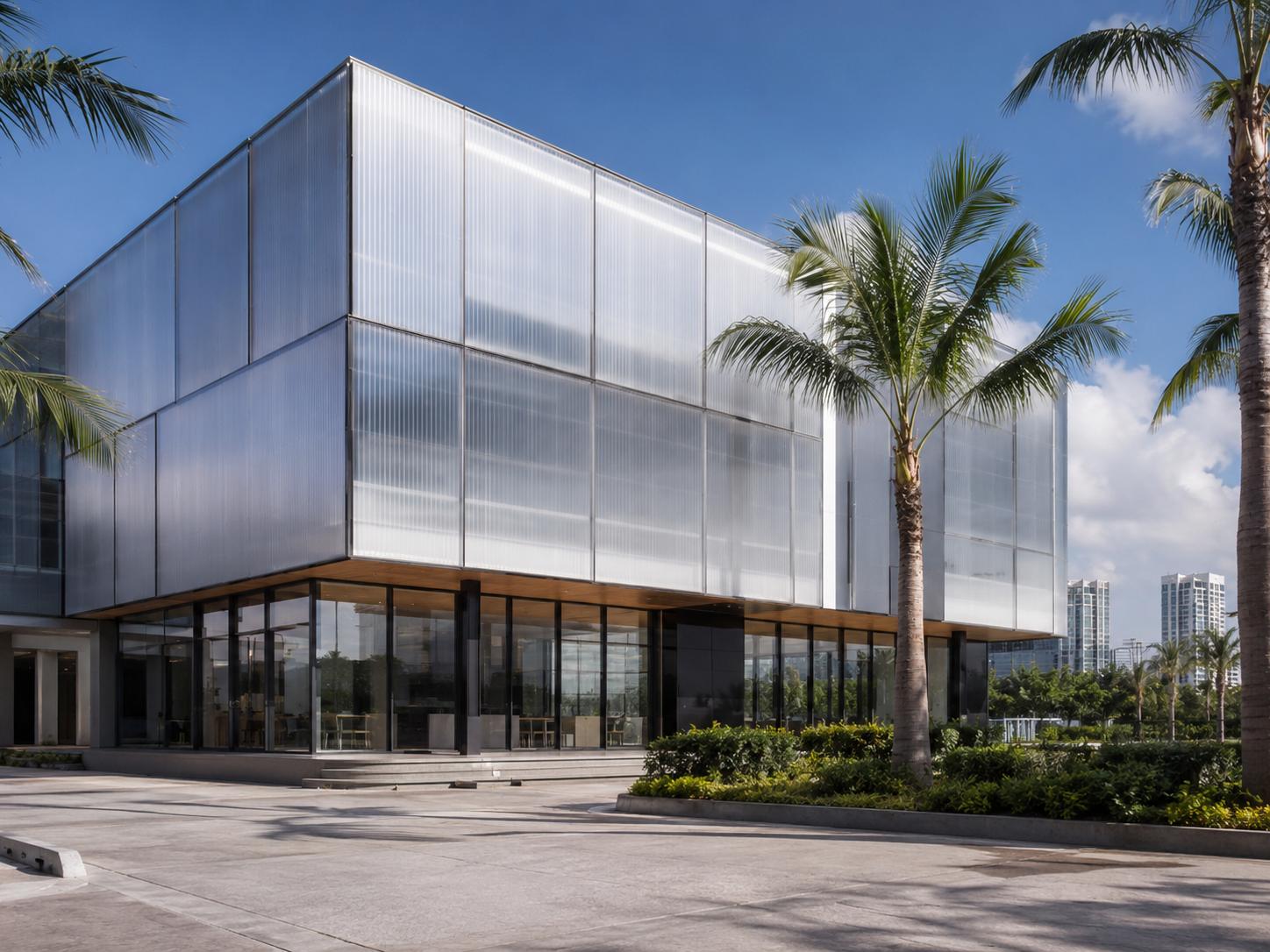
Overview
- Facade systems in the Philippines must balance aesthetics with durability amid frequent earthquakes, typhoons, and extreme heat.
- These conditions can cause structural stress, material degradation, and performance failures if not properly addressed. Design, material selection, and execution are critical.
- KENMOS provides durable polycarbonate sheets suited for local environmental demands.
Facades are among the most visually defining elements of modern buildings. Beyond creating a strong architectural identity, they contribute to natural lighting and environmental performance. However, despite these benefits, poorly designed or installed facades can introduce performance issues that affect a building’s durability, efficiency, and long-term functionality.
Understanding the key challenges in facade design in the Philippines is essential to maintain both visual intent and functional performance. These factors must be considered during the design stage to prevent facade systems from becoming long-term liabilities.
As a trusted polycarbonate sheet supplier in the Philippines, KENMOS provides expert guidance in selecting the right materials for your project. Read on to learn more.
Seismic and Structural Vulnerability
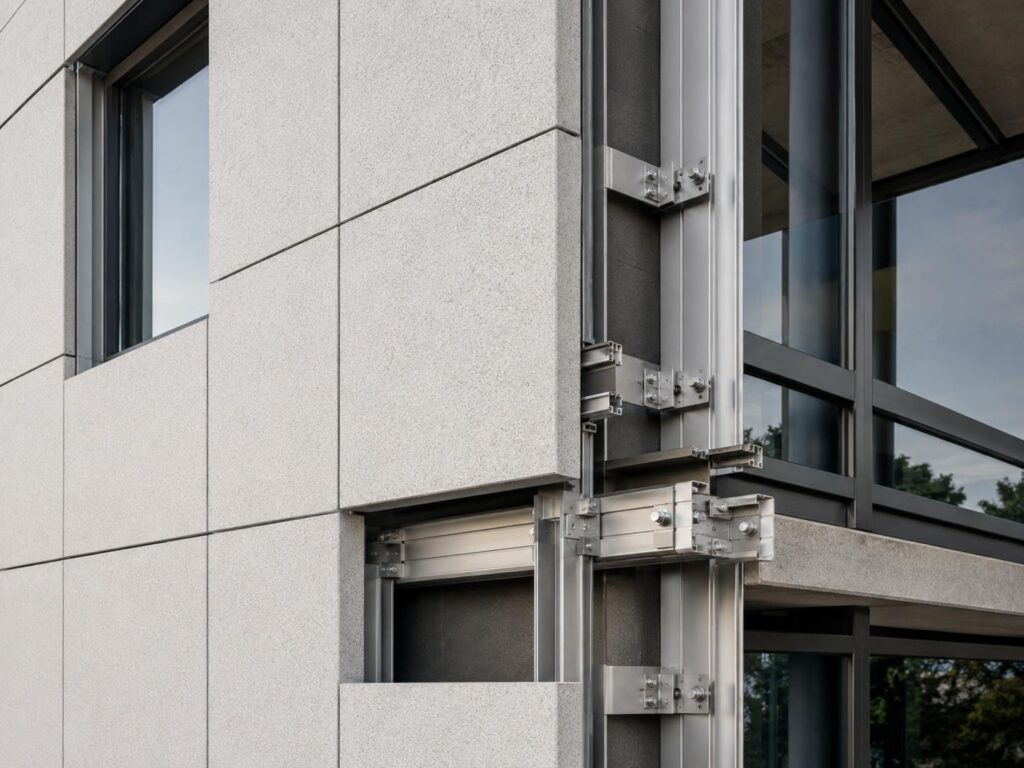
Facades must withstand unexpected seismic movement due to the frequency of earthquakes the country experiences each year. These conditions place considerable stress on glazing systems and facade anchors, making structural resilience a critical design priority.
Seismic Activity
The Philippines experiences around 20 earthquakes daily, with approximately 100 to 150 felt each year. This frequent seismic activity places significant stress on building facades, particularly rigid systems that cannot accommodate structural movement. During an earthquake, excessive shaking can cause facade components to crack, detach, or fail.
Choosing the right materials helps reduce these risks. Heavy facade materials generate greater inertia during seismic events, increasing the likelihood of damage. Lightweight, impact-resistant alternatives are better able to absorb movement and maintain structural integrity.
KENMOS supplies high-quality polycarbonate sheets that are significantly lighter and stronger than glass. Their flexibility allows them to withstand seismic displacement more effectively, making them a reliable choice for facade applications in earthquake-prone areas.
Harsh Tropical Weather
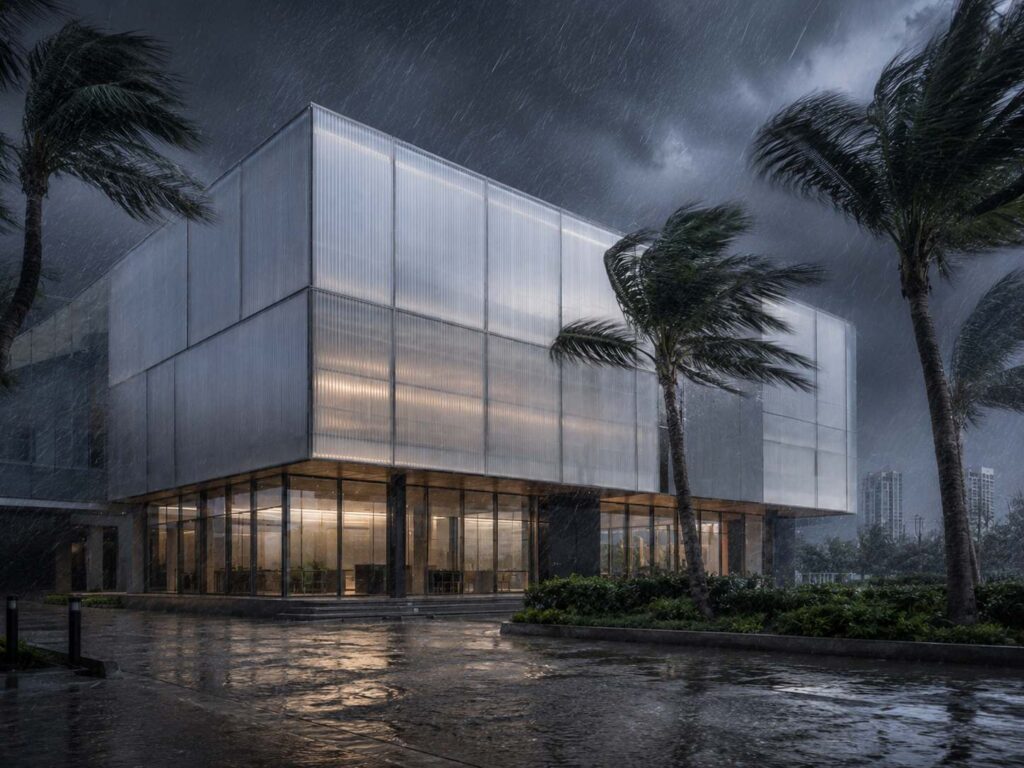
Local buildings remain exposed to strong typhoons and year-round extreme heat. Architects must design exteriors that maintain structural reliability and visual performance despite continuous exposure to weather.
Typhoons and Wind Load
Few environmental forces place greater stress on facade systems than typhoon-driven wind pressure and airborne debris. The Philippines experiences an average of 20 tropical cyclones each year, with several strong enough to cause significant structural damage. Under such conditions, improperly designed facades are at risk of glazing failure or complete detachment.
Wind loads are significantly more dangerous for large transparent facades because pressure differences can impose substantial stress on framing systems. It’s important to practice proper drainage detailing and select reinforced framing support to maintain the exterior’s performance during extreme weather events.
High Heat and Humidity
Tropical climates and sustained heat exposure can accelerate facade deterioration. In the Philippines, high humidity further increases the risk of corrosion and condensation in poorly ventilated systems. Over time, these conditions reduce the durability of materials that are not designed to withstand continuous thermal and environmental stress.
Extreme heat has intensified these concerns in recent years, especially after the country recently recorded heat indices exceeding 50°C across several regions. Excessive surface temperatures can cause warping and thermal stress in assemblies exposed to direct sunlight.
Materials like polycarbonate sheets have become a popular choice among designers for this reason. Their thermal stability and UV resistance help maintain lasting performance even under intense heat for extended periods.
Supply Chain and Expertise Limits
Facade performance is affected not only by design quality but also by technical execution during construction. Delays in procurement and limited installation expertise often create performance risks that compromise even well-designed systems.
Material Lead-Time Mismatch
Project timelines frequently become vulnerable when specialized facade materials are unavailable within the required project schedules. Imported components often face procurement delays that compromise coordination between structural works and exterior installation phases. These interruptions can force professionals to substitute lower-performing materials to maintain project timelines.
Inconsistent supply availability may also compromise quality control, particularly for projects that need large quantities of uniform panels and accessories. Working with experienced local suppliers helps architects maintain consistent access to high-quality materials that fit design requirements.
Budgetary Instability
Facade systems are often among the first architectural elements affected when project costs fluctuate unexpectedly. These instabilities are caused by factors such as price volatility and unforeseen budget shortages, which delay the arrival of the components critical to their completion. These financial pressures sometimes encourage the use of substandard materials that fail to meet long-term durability and safety requirements.
Cost-cutting measures become especially problematic when they compromise structural performance resistance. Lower-grade materials may initially appear cost-effective but often lead to higher maintenance costs over time. While high-quality materials cost more upfront, they provide better long-term value than short-term procurement savings.
Key Takeaway
The key challenges in facade design in the Philippines require architects to carefully plan for aesthetics and long-term durability throughout the design process. Addressing these challenges early allows professionals to create not just visually stunning masterpieces but also structurally sound building exteriors that will last for years to come.
If you’re seeking dependable facade materials, choose KENMOS. We supply high-quality polycarbonate sheets that can reliably support complex building designs. Get a quote today to find the ideal components for your project.