What Makes Polycarbonate Sheets Strong Materials?
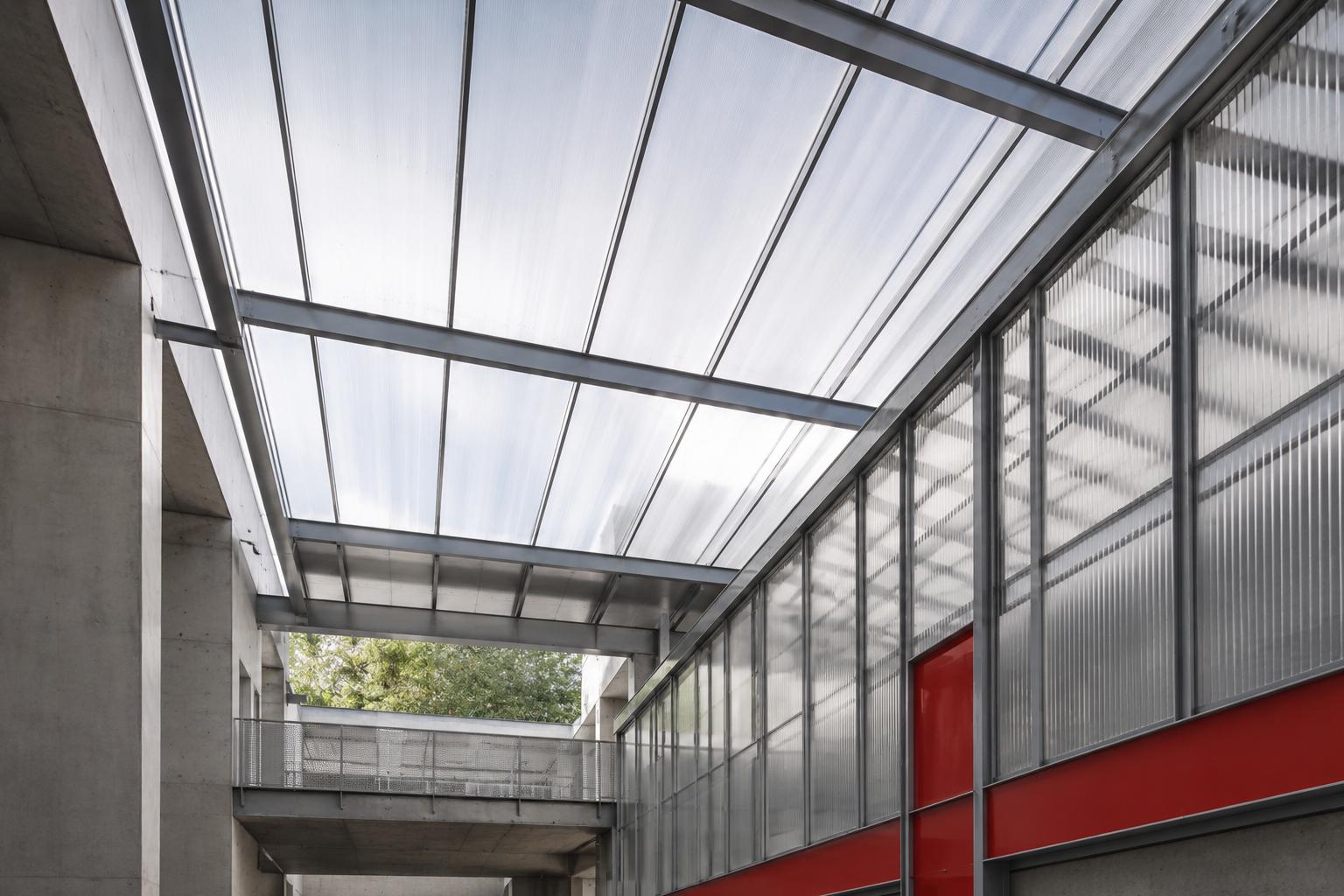
What makes polycarbonate sheets strong materials?
- Dense molecular backbone
- High impact and tensile strength
- Elastic and flexible properties
- Lightweight profile
- Extreme temperature and weather resistance
Overview
- Polycarbonate sheets are high-performance glazing materials engineered for strength, impact resistance, and architectural flexibility. Their performance stems from a stable polymer structure that allows the material to absorb and distribute stress rather than fail under impact.
- They combine high impact strength, flexibility, lightweight properties, and thermal stability, enabling reliable use in facades, skylights, and protective systems.
- KENMOS supplies engineered polycarbonate solutions, backed by technical guidance, to help architects and designers select appropriate specifications for durable, visually refined architectural applications.
If you’re specifying materials for architectural facades or structural glazing, then you’ve probably heard of how polycarbonate sheets can reliably get the job done. These materials are known for their transparency and exceptional strength. With its many properties, it’s normal to be curious about what makes polycarbonate sheets strong materials for your design.
These sheets stand out for their consistent performance under conditions where traditional glazing fails. As one of the top suppliers of polycarbonate sheets in the Philippines, KENMOS provides technical guidance to help you select the best sheets to design high-performance builds. Continue reading to understand what gives it its structural strength.
Dense Molecular Backbone
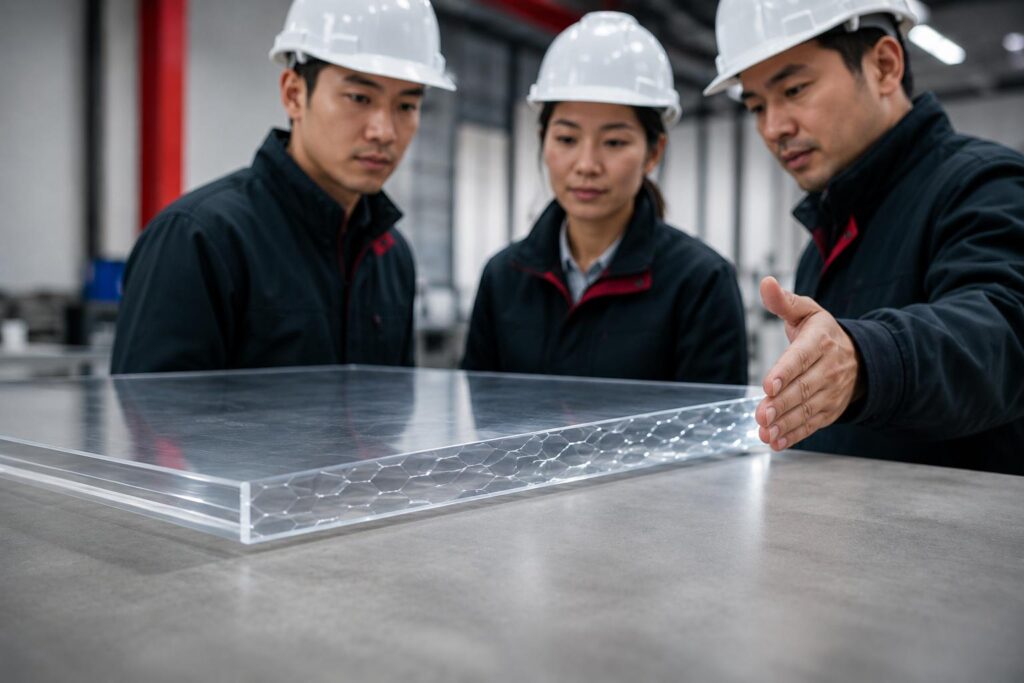
The structural strength of polycarbonate comes from its tightly bonded molecular framework. This sheet is produced by combining Bisphenol A (BPA) and phosgene monomers, which create stable polymer chains linked through carbonate bonds. This engineered structure gives material rigidity and controlled flexibility that is difficult to achieve with conventional glazing materials.
Instead of cracking under concentrated force, the polymer chains help distribute impact stress throughout the sheet surface. The rigid aromatic components from BPA contribute to structural stability, while the molecular arrangement still allows slight flexibility under load. Polycarbonate sheets can maintain strength and dimensional stability in high-exposure installations where long-term durability is critical.
High Impact and Tensile Strength
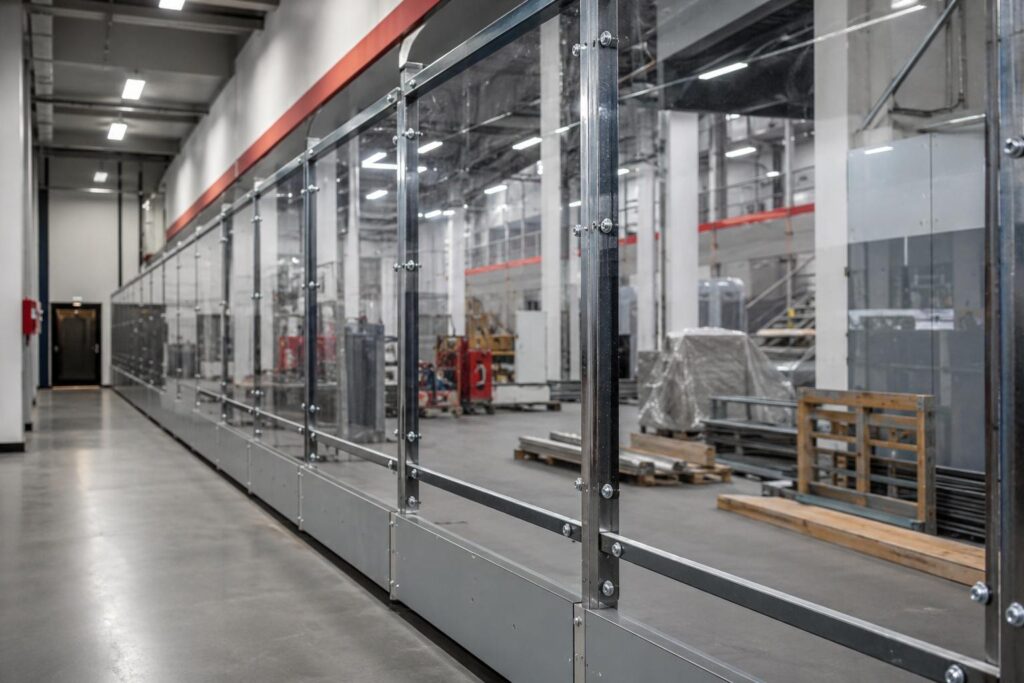
Polycarbonate sheets are designed to withstand high levels of mechanical stress without cracking or failing under pressure. With a tensile strength of up to 65 MPa, the material can withstand substantial forces while maintaining its structural integrity. This makes it suitable for architectural environments exposed to hail, debris, vibration, and repeated impact.
Unlike traditional glass, which can shatter under concentrated force, polycarbonate absorbs and distributes impact energy across its surface. This reduces the likelihood of brittle failure during sudden impacts or heavy loading. Because of this behavior, polycarbonate is widely used in safety glazing, protective barriers, skylights, covered walkways, and other applications that require durability and occupant protection.
Elastic and Flexible Properties
Polycarbonate’s flexibility results from its long-chain polymer structure, composed of Bisphenol A (BPA) and carbonate linkages. Unlike glass, these chains are not fixed in a rigid crystalline structure, which permits limited molecular movement under stress. This enables the sheet to bend under load and return to its original shape.
In architectural design, this behavior is valuable in real operating conditions, where materials are subject to thermal expansion and vibration. Stress is distributed across the surface to maintain stability even when the building envelope is subjected to changing environmental loads. This allows greater design freedom and continuous facade forms without the fragility of rigid glazing systems.
Lightweight Profile
Reducing dead load while maintaining strength is a critical consideration in architectural design, a balance that polycarbonate can reliably achieve. Despite its high strength, polycarbonate weighs roughly half as much as standard glass. This significantly reduces handling difficulty during transport, fabrication, and on-site installation, especially for large-format architectural panels.
The reduced weight also lowers stress on framing systems and primary structural supports. For designers, this opens up opportunities for longer spans and wider surface coverage without the need for excessive reinforcement or heavier supporting members.
Extreme Temperature and Weather Resistance
Polycarbonate maintains its structural integrity across a wide temperature range, typically from -20°C to 140°C. Its engineered polymer structure allows it to expand and contract without losing molecular cohesion. As a result, it remains mechanically stable even under rapid temperature changes.
In architectural applications, this stability is critical for exterior systems that are constantly exposed to environmental variation. Continuous exposure to direct sunlight and seasonal shifts does not easily cause embrittlement. This makes polycarbonate suitable for long-term use in facades and outdoor enclosures where it’s critical to maintain visual appeal.
Get High-Quality Polycarbonate Sheets From KENMOS
Here at KENMOS, we supply polycarbonate sheets engineered for durability, clarity, and structural reliability across a wide range of applications. Each product is designed to meet not only the performance demands but also the visual aesthetic requirements of modern architectural systems.
With technical expertise and industry-focused support, KENMOS helps architects and designers select the right material configuration for their projects. From structural glazing to protective roofing systems, our solutions are built for reliable performance for years to come.
Key Takeaway
Understanding what makes polycarbonate sheets strong materials allows architects to make more precise decisions when balancing safety and durability with design intent. Their unique properties and reliable stability work together to create a material suited for high-performance architectural systems.
For projects that demand reliable structural materials, KENMOS provides engineered polycarbonate solutions backed by the technical expertise required for successful installation. Get a quote today to specify the right sheets for your next project.