What You Need to Know About Polycarbonate Sheets

Overview
- Polycarbonate sheets are a versatile and durable material widely used in modern applications that require strength and transparency. This article explores their key properties, explaining how these features make them suitable for safety-critical projects.
- It also covers different types of sheets, such as solid and embossed, and their specific advantages for various projects. Adequate knowledge gives construction professionals a clear understanding of when and why to specify polycarbonate for their projects.
- KENMOS provides high-quality polycarbonate sheets that combine these technical benefits with reliability for long-lasting, professional results.
Polycarbonate sheets have become a go-to material for construction professionals seeking a balance between versatility and durability. They offer higher impact resistance and lasting transparency that make them ideal for demanding building environments. Despite their growing popularity, however, many may not fully realize the spectrum of properties that polycarbonate delivers.
This guide explores what you need to know about polycarbonate sheets. From their core characteristics to practical uses, understanding these details helps you make informed decisions on material selection. Continue reading to gain expert insights that can improve your project’s overall performance.
Key Properties and Benefits
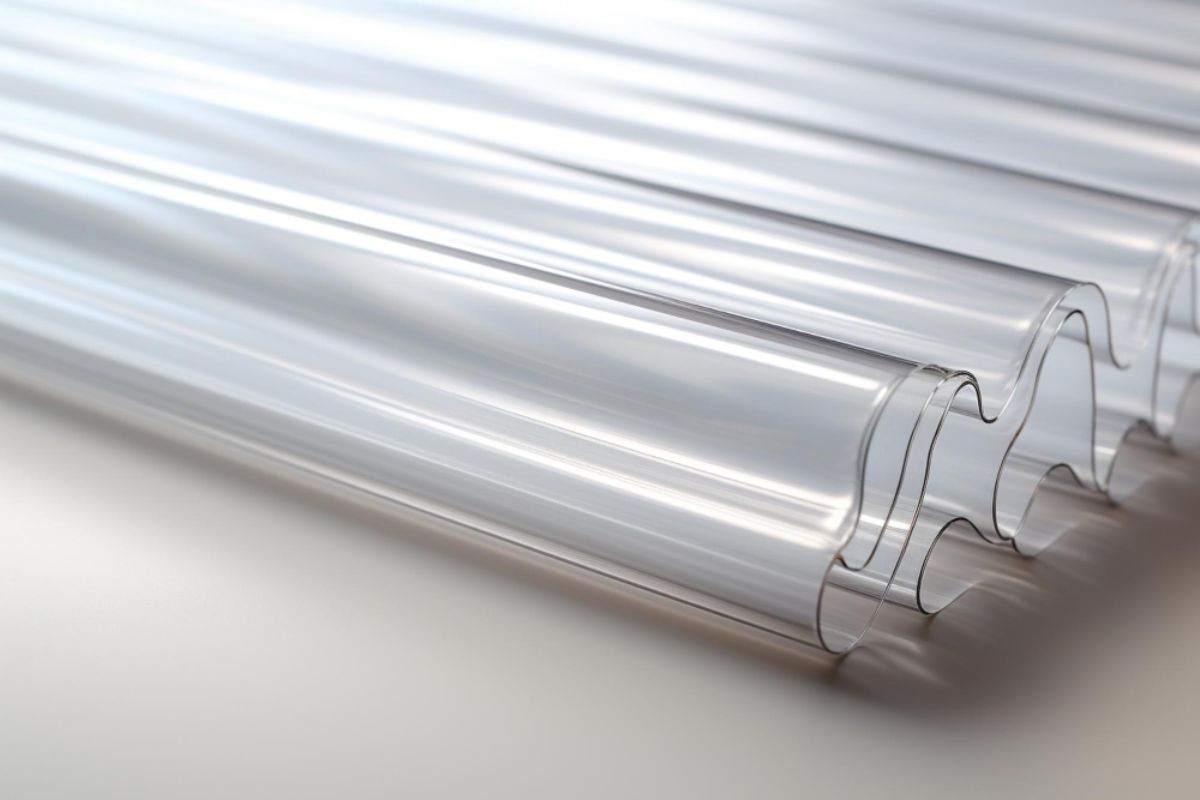
Polycarbonate solutions are prized for their strong combination of strength, transparency, and adaptability. Learning their distinct properties guides professionals in selecting the right material that can withstand demanding conditions in specific applications.
High Impact Resistance
The unique molecular structure of polycarbonate makes it nearly unbreakable. It has a high tensile strength that reaches up to 65 MPa, withstanding high-pressure mechanical stress that would typically cause glass to shatter. This makes it particularly reliable in environments typically exposed to sudden force or debris impact.
Instead of shattering upon impact, polycarbonate distributes force across its surface through elastic deformation. This eliminates the presence of localized failure points, which is critical for applications like machine guards or safety barriers. These properties prevent polycarbonates from causing material breakage-induced hazards and allow them to enjoy longer service lives as a result.
Strong Light Transmission
Aside from structural durability, polycarbonate sheets provide high optical performance. They allow natural daylight to pass through efficiently, making the material suitable for architectural glazing or transparent enclosures. Unlike glass, their clarity does not come at the expense of impact resistance.
In addition to initial transparency, polycarbonate maintains optical stability over time when treated with UV-protective coatings. These coatings limit yellowing, surface clouding, and the loss of light transmission caused by prolonged sun exposure. As a result, installations meant for the long-term retain consistent visual performance while staying aligned with strict safety requirements.
Lightweight
Another notable property is that polycarbonate’s density allows it to weigh only one-sixth the weight of standard glass. This significantly reduces handling complexities and installation challenges on-site. Their lower weight minimizes lift strain, and they reduce the risk of accidents during overhead or elevated installations. Moreover, it simplifies transportation and staging, especially in large-scale construction projects.
From a structural standpoint, lighter panels reduce dead load on supporting frameworks. Polycarbonate sheets allow professionals to optimize framing systems without compromising the structure’s strength or stability. Over time, this reduced stress contributes to better overall building performance and more efficient material use.
Flexible Thermal Properties
Unlike many other plastics that become brittle in unstable thermal environments, polycarbonate retains its toughness well below its glass transition temperature of about 148°C. It maintains exceptional mechanical stability across a wide temperature range, typically from -50°C to 150°C. Its thermal tolerance allows it to perform reliably in both cold storage environments and high-heat installations.
Their heat resistance works well with UV and weather-resistant coatings to protect structures against thermal expansion. In environments exposed to direct heat sources, it reliably retains its shape and form. This consistency makes it highly essential for roofing systems or protective enclosures, which are most often exposed to fluctuating temperatures.
Versatile Applications
Polycarbonate’s balance of strength, transparency, and formability allows it to adapt to a wide range of construction applications. It can be thermoformed or cut without weakening the material’s integrity, making it suitable for both flat and curved installations. The material’s flexibility makes it especially useful for supporting diverse design and functional requirements across projects.
Among common applications, polycarbonate is most used in greenhouses and glazing panels. Its ability to perform under repeated handling and stress makes it a dependable protective component across residential, commercial, and industrial settings.
Common Uses of Polycarbonate Sheets

Polycarbonate sheets are widely specified in construction and industrial settings due to their exceptional qualities. Their ability to perform reliably under high levels of pressure and exposure makes them suitable for the most safety-critical builds.
They are commonly used in the following applications:
- Roofing
- Greenhouse
- Carports
- Glazing
- Machine guards
- Safety barriers
- Safety Gear
Types to Consider
There are two types of polycarbonate sheets: solid polycarbonate and embossed solid polycarbonate. Understanding the different qualities of both options allows professionals to specify the best materials that deliver the strength and visual intent their structure needs.
Solid Polycarbonate
Solid polycarbonates are ideal for applications that need high visibility and clarity, such as windows or industrial glazing. They are known for their smooth, clear surfaces that are often comparable to traditional glass. Solid alternatives provide higher light transmission due to their pure transparency.
Embossed Solid Polycarbonate
Unlike solid polycarbonate, embossed sheets have a textured or patterned surface to diffuse light. This type of sheet is most useful in areas where low lighting is needed. They’re often integrated into decorative panels, shower doors, and partitions, using strategic visual appeal for privacy.
Get Polycarbonate Sheets from KENMOS
KENMOS ranks among the top polycarbonate sheet suppliers in the Philippines, delivering materials engineered for high-impact resistance and long-term performance. Our sheets are designed to maintain structural integrity across diverse applications, ensuring projects stay aligned with projected schedules and budgets.
From industrial facilities to residential builds, we provide versatile options that combine strength, clarity, and adaptability. Professionals can rely on our products to achieve safe and visually precise installations beyond vertical structures.
Key Takeaway
These key insights into what you need to know about polycarbonate sheets highlight the qualities that make them essential for modern construction projects. Understanding each property helps you make informed decisions that ensure not just safer installations, but also longer-lasting outputs for years to come.
Ready to find high-performance polycarbonate solutions? KENMOS offers a full range of reliable sheets engineered for strength and clarity. Get a quote today to learn more about our products’ specifications.