7 Transparent Materials Used in Vehicle Construction
Overview
- Modern vehicle construction relies on versatile transparent materials balancing safety, clarity, and weight.
- From laminated and tempered glass to advanced smart films and high-performance polymers like polycarbonate and acrylic, each serves distinct automotive roles.
- Suppliers like Kenmos provide quality plastic sheet solutions, supporting evolving automotive demands and emerging material innovations.
Transparent components do far more than provide a clear view of the road—they play an integral role in vehicle safety, structural integrity, and efficiency. Driven by rising performance standards, the transparent materials used in vehicle construction have evolved rapidly.
Automakers are adopting advanced alternatives to traditional glass, creating stronger, lighter, and more versatile vehicle structures tailored to modern driving demands.
Automotive Glazing
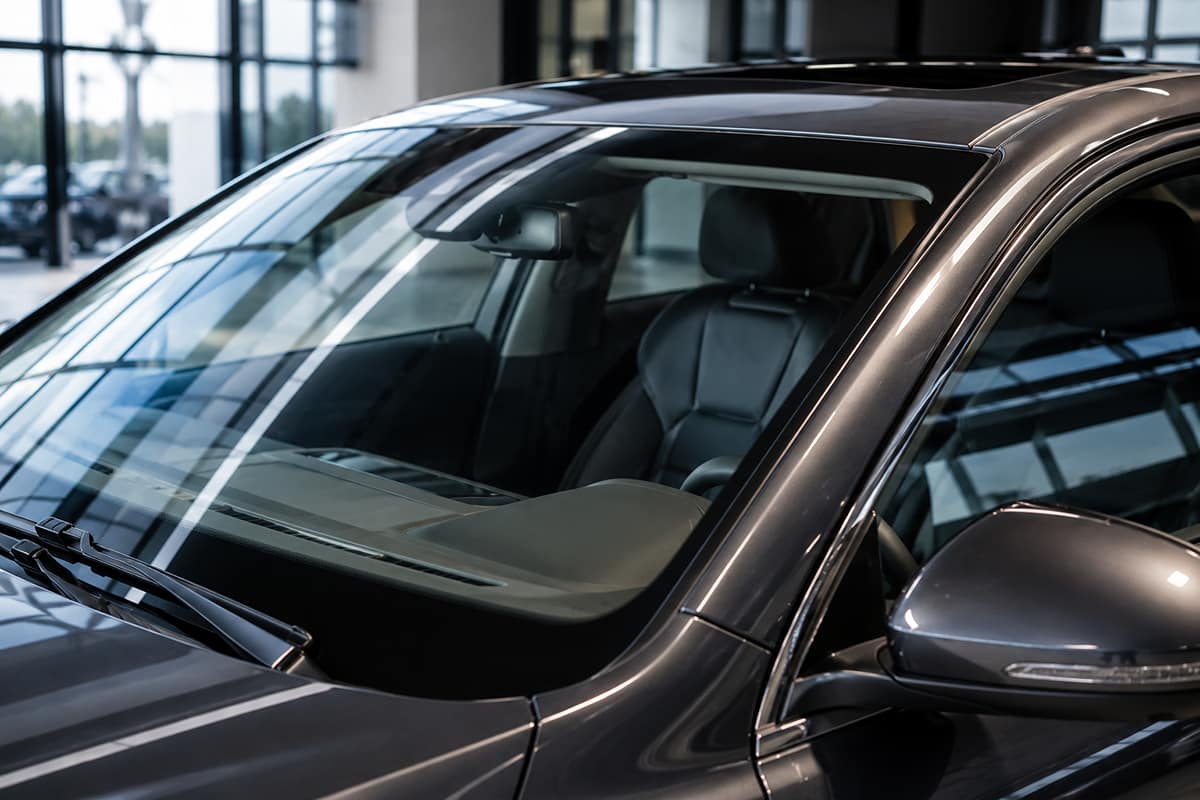
Designed for maximum clarity and passenger protection, automotive glazing includes all transparent vehicle panels. This covers windshields, side windows, rear glass, sunroofs, and custom protective barriers.
Laminated Glass
Engineered primarily for vehicle windshields, this multi-layer material bonds two glass sheets around a tough Polyvinyl Butyral (PVB) interlayer. Upon severe impact, the internal plastic layer retains shattered fragments, preventing loose glass from injuring occupants and ensuring the driver maintains a clear line of sight. Advanced configurations can also house acoustic damping, heating elements, and driver-assist sensors directly within the core layer.
Tempered Glass
Designed specifically for side and rear vehicle windows, this high-strength alternative undergoes specialized thermal treatment to withstand intense mechanical stress and road vibration. When exposed to extreme force, it fractures into tiny, dull-edged granules rather than sharp, dangerous shards—reducing occupant injury while allowing swift emergency egress if required.
Smart Glass and Films
Integrating responsive tinting technology, these adaptive glazing solutions alter light transmission based on ambient conditions or driver preference. Electrochromic systems automatically darken in heavy sunlight to reject solar heat and reduce climate control energy demands.
Complementary high-performance films can also be integrated into standard window assemblies to maximize UV block, eliminate glare, and boost overall cabin efficiency in electric vehicles, commercial fleets, and luxury automobiles.
High-Performance Plastics and Polymers
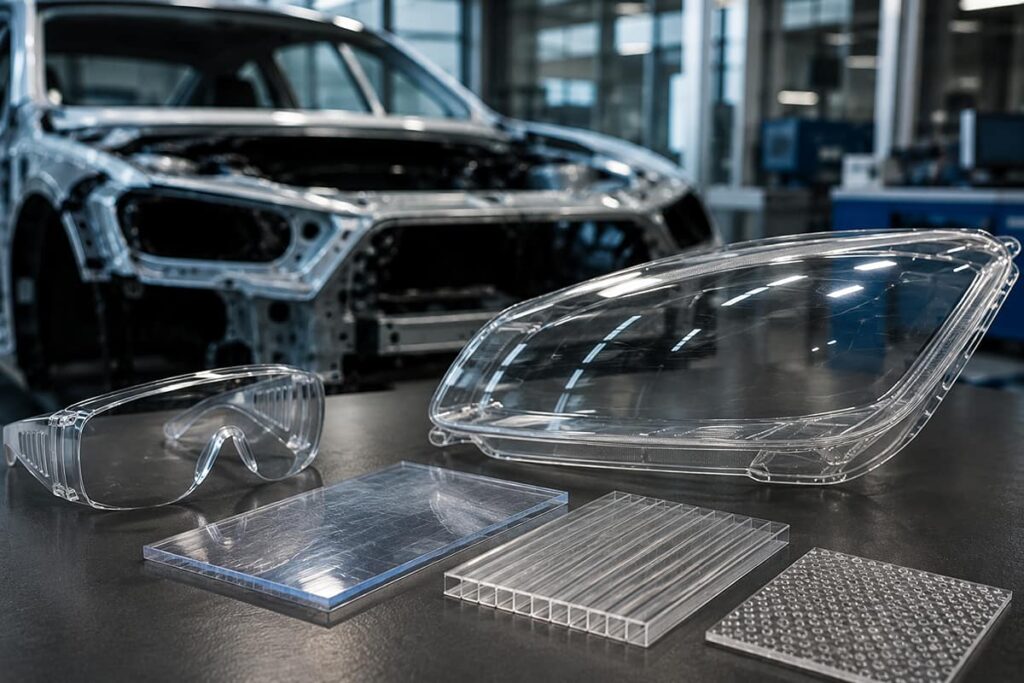
More than just traditional glass, high-performance plastics and polymers have become valuable alternatives in vehicle manufacturing. Compared to glass, several polymer-based products can be molded into complex shapes, which enables builders to create aerodynamic designs and specialized pieces.
Polycarbonate (PC)
It’s a top-tier thermoplastic known for its excellent impact resistance and lightweight composition. In vehicle manufacturing, it is commonly used for parts that require durability and a well-balanced weight. Applications include headlamp lenses, protective covers, motorcycle windshields, panoramic roof panels, and specialized vehicle glazing systems. Its ability to stand against strong impacts makes it ideal for settings where safety and functionality are vital.
The good news? Kenmos offers professional-grade polycarbonate sheets engineered for strength, clarity, and long-term performance. Available in diverse sizes and finishes, we support businesses in choosing transparent solutions tailored to your project goals.
Acrylic (PMMA)
Acrylic, or polymethyl methacrylate (PMMA), is valued for its exceptional optical clarity, weather resistance, and lightweight structure. While rarely used for primary vehicle windows, it is essential for secondary automotive components.
Manufacturers utilize PMMA for taillight covers, instrument panels, display screens, and interior trim. Its clarity and ease of fabrication enable sleek, highly precise designs.
As a trusted acrylic sheet supplier in the Philippines, Kenmos delivers versatile PMMA solutions tailored for high-visibility and lightweight applications. We offer a wide range of colors, finishes, and dimensions, backed by technical guidance to ensure the right fit for your project.
Emerging and Future Materials
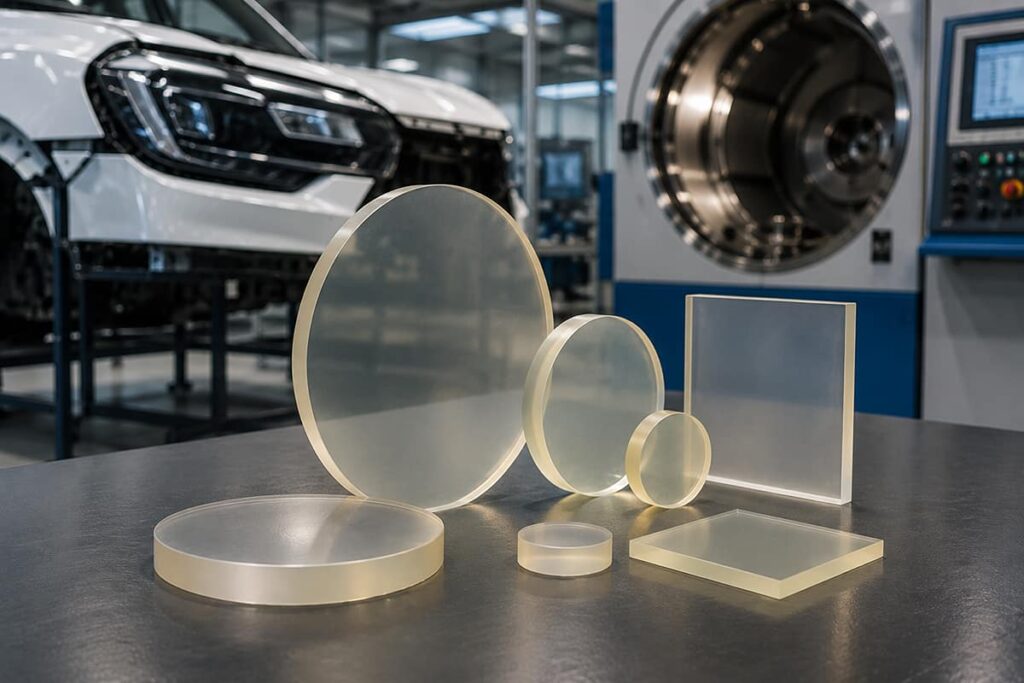
As automotive technology continues advancing, researchers are exploring new transparent materials that could transform vehicle construction. These innovations focus on improving strength, sustainability, and performance beyond traditional options.
Transparent Wood
Transparent wood is an emerging material created by modifying natural wood structures to allow light transmission. While still primarily under research and development, it presents potential opportunities for future automotive applications.
Its combination of renewable origins, strength, and unique optical properties makes it interesting for sustainable vehicle design. Future applications may include interior panels, decorative elements, and lightweight structural components where manufacturers want to combine natural aesthetics with modern performance.
Transparent Ceramics (ALON)
Transparent ceramics, such as aluminum oxynitride (ALON), are contemporary tools that combine the vivid appearance of glass with the strength of ceramics. Unlike standard glass, these items are highly resistant to scratches, impacts, and extreme conditions. Although currently more common in specialized protective applications, these have potential for future automotive utilizations requiring superior durability.
Key Takeaway
Understanding the different transparent materials used in vehicle construction allows manufacturing officers to choose solutions according to safety, durability, optical performance, and design flexibility criteria. From laminated and tempered glass to modern materials like polycarbonate and acrylic, every choice offers unique benefits.
Kenmos delivers top-quality acrylic and polycarbonate solutions to support modern industrial and construction demands. With reliable materials, customizable selections, and technical guidance, we help businesses find solutions that match your project specifications. Reach out to us today to learn more.